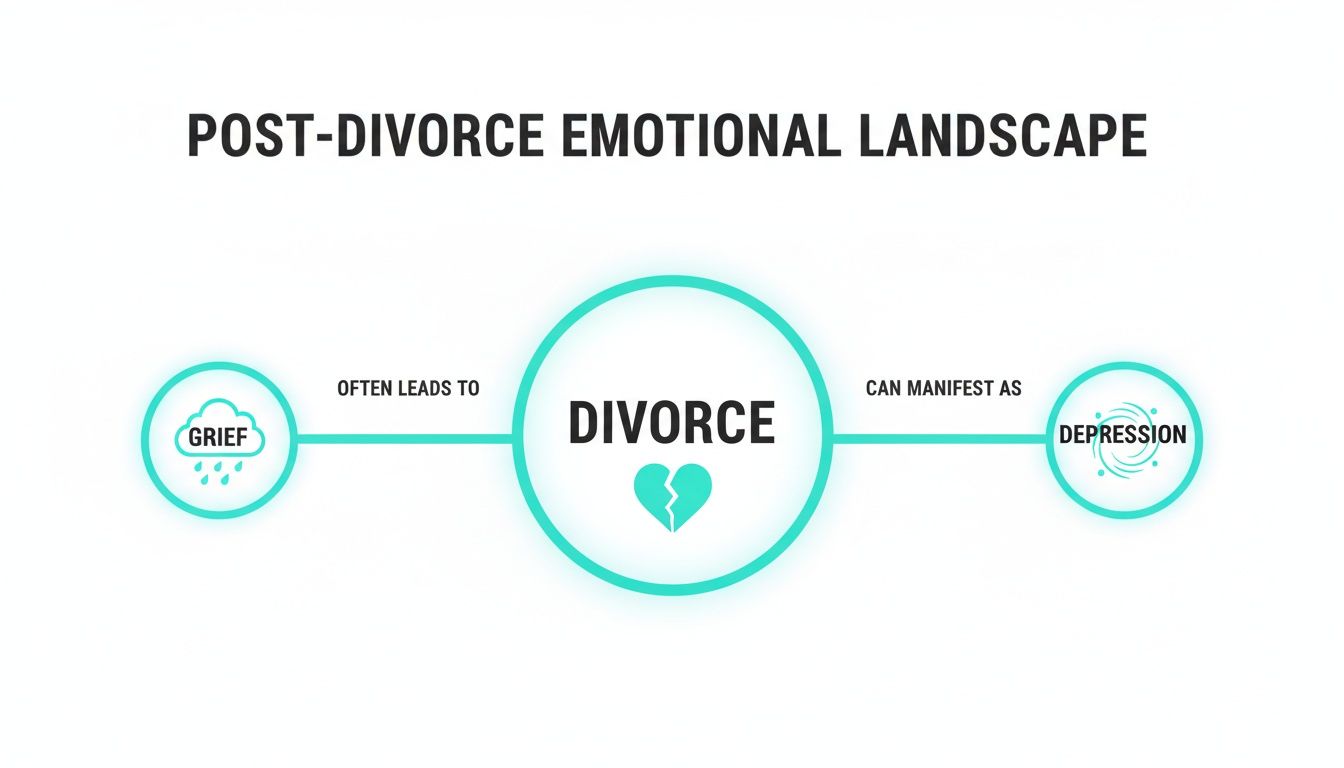
When a marriage ends, it feels like more than just a legal event—it's like an emotional earthquake that can shake your entire world. Feeling sad, angry, or just plain lost is a completely normal part of the healing process. But it's so important to know the difference between this natural grief and something more serious: post divorce depression.
Think of grief as a powerful storm. It’s intense, maybe even scary, with huge waves of sadness that crash over you. But, eventually, the storm passes. The sun comes out again, and you start to find your footing on solid ground.
Post divorce depression, on the other hand, is like a dense, heavy fog that rolls in and just won't lift. It blankets everything, making it impossible to see a path forward and draining all the color from your life. It’s a persistent mental health condition that goes far beyond the normal sadness of a breakup, making it hard to function day-to-day.
So how can you tell if you’re weathering a temporary storm or stuck in a persistent fog? Grief is an active healing process. You'll have waves of intense emotion, but they're usually broken up by moments where you feel okay, or maybe even a little happy. Depression is a much more constant state of being.
Distinguishing between the two is vital because while grief needs time and self-compassion, depression often requires professional help to navigate. Let's break down some key differences.
| Symptom | Normal Grief Response | Potential Sign of Depression |
|---|---|---|
| Sadness | Comes in waves, often triggered by memories. You can still experience moments of joy. | A persistent, heavy feeling of sadness or emptiness that rarely lets up. |
| Interest & Pleasure | You might temporarily lose interest in hobbies but can still find enjoyment in some things. | A total loss of interest or pleasure in almost all activities you once enjoyed (anhedonia). |
| Self-Esteem | You might regret things but your overall sense of self-worth remains intact. | Intense feelings of worthlessness or excessive, inappropriate guilt. |
| Future Outlook | The future feels uncertain and painful, but you can imagine a time when it will get better. | A pervasive sense of hopelessness; believing things will never improve. |
| Daily Functioning | You may struggle some days but can generally manage work, parenting, and basic self-care. | Significant impairment in your ability to function at work, at home, or in social settings. |
Recognizing these patterns is the first step. The challenges of a massive life change like divorce can absolutely trigger a depressive episode. In fact, one major review found that about 60% of people with a history of depression experience a new episode after a divorce. The emotional toll can be immense for the entire family, and understanding the impact of divorce on a child's mental health can also provide important perspective during this difficult time.
Post divorce depression isn't a sign of weakness or an inability to cope; it's a legitimate health condition triggered by a major life trauma. Recognizing it for what it is—a persistent fog, not a passing storm—is the first, most powerful step toward finding your way back to the light.
Trying to navigate life after a divorce can feel like you’re lost in a dense fog. When you're just trying to get through the day-to-day challenges of such a huge life change, it’s easy to miss the warning signs of post-divorce depression. Sadness is a normal, expected part of the grieving process, but depression is something different—a more persistent and heavy presence that can seriously impact your well-being.
Knowing the difference is absolutely critical. The initial emotional storm of grief is one thing, but sometimes, that storm settles into the lingering, heavy fog of depression.
While grief is a direct response to the loss, depression becomes an overarching emotional state that casts a shadow over every part of your life. Learning to spot these specific signs in yourself or someone you care about is the first real step toward finding the right support.
Post-divorce depression isn't a single feeling; it’s a cluster of symptoms that can get in the way of your ability to function. It shows up in real, tangible ways in your daily life.