So, what exactly is a self-rating depression scale? It’s a private questionnaire that helps you measure and track symptoms of depression. It's a structured way to check in with yourself by asking about things like your mood, energy levels, and sleep patterns over a specific time, usually the past two weeks.
Think of a self-rating depression scale like a personal weather report for your emotional state. It isn't a diagnosis. Instead, it’s a simple tool that gives you a clear snapshot of how you're doing right now. These questionnaires help turn vague, abstract feelings into something more concrete, helping you see patterns you might not have noticed otherwise.
By consistently asking about common symptoms—like a lingering sadness, losing interest in things you once enjoyed, changes in your appetite, or trouble concentrating—these scales help create a baseline. This lets you track your mental health over time, giving you a more objective look at your well-being.
The real goal of a self-rating depression scale is to empower you. It gives you a solid starting point for self-reflection and a powerful tool to bring to a conversation with a doctor or therapist. Instead of just saying, "I feel down," you can show them specific information about your symptoms.
A self-rating scale gives you a structured language to describe your experience. This clarity can make discussions with providers more productive, leading to better-informed decisions about your care.
This kind of information is incredibly valuable when you're talking with a therapist, your family doctor, or providers of medication management for mental health disorders, such as a:
Ultimately, these scales take some of the mystery out of checking in on your mental health. They are a proactive, private first step you can take to better understand where you are emotionally. If you feel ready to take that step, you can begin the process with a confidential mental health intake form to connect with a professional who can help guide you.
If you ever use a self-rating depression scale, you’ll quickly notice there isn’t just one single version. Several different tools exist, and while they all try to measure symptoms, each one has a slightly different focus, length, and purpose. Knowing a little about them can make the whole process feel less intimidating and more personal.
It helps to think of these tools like different kinds of cameras. One might be a quick snapshot, like the PHQ-9, designed for a fast check-in. Another is more like a detailed portrait session, like the Beck Depression Inventory, which captures more nuance. They’re all looking at the same subject—your emotional well-being—but from different angles and with different levels of detail.
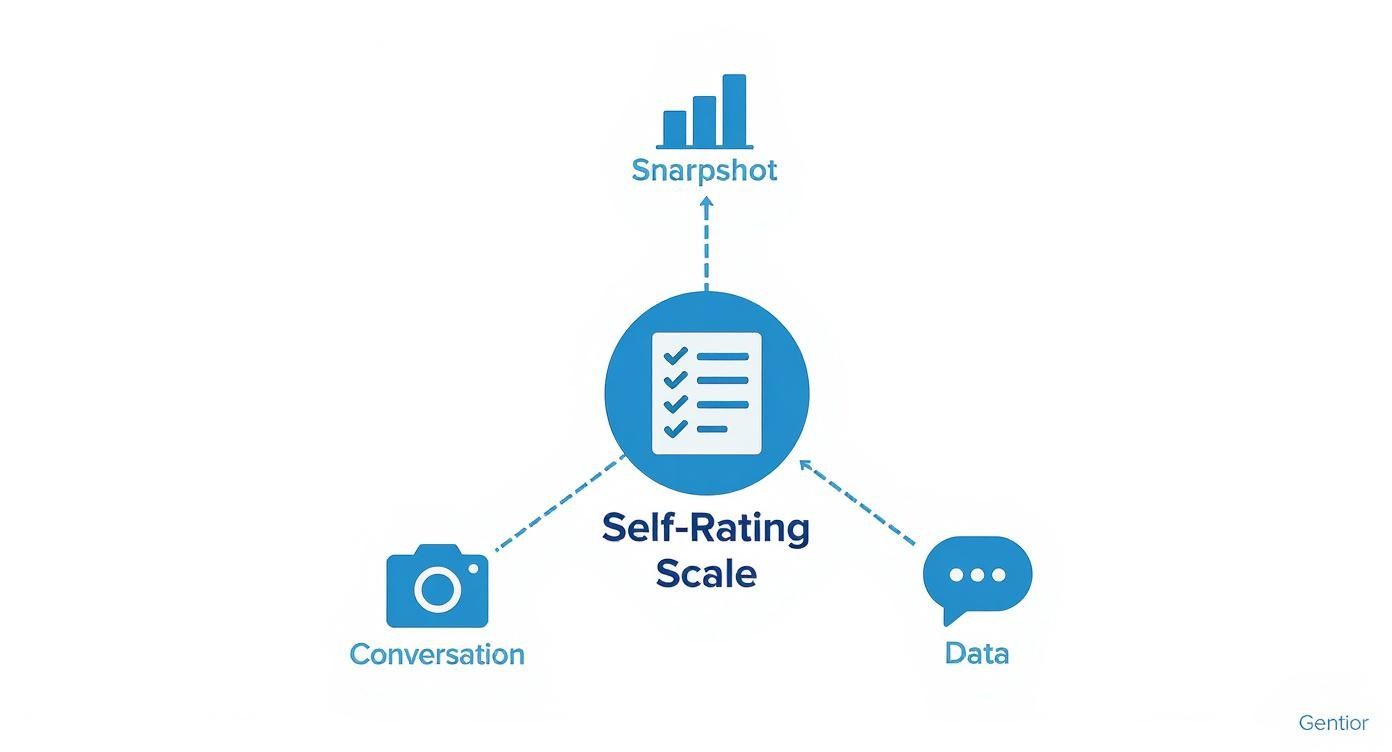
This visual shows how a self-rating scale translates your internal feelings into a piece of data that can become a starting point for a really productive conversation.
As you can see, the process flows from a simple questionnaire to a tangible result. That result isn't a final diagnosis, but rather a powerful tool to begin a discussion with a professional.
One of the most common tools you'll encounter is the Patient Health Questionnaire-9 (PHQ-9). This nine-question scale is frequently used in primary care settings. It’s a quick and effective way for a doctor to check on your mental health during a routine visit.