
Impulsivity isn't some simple character flaw you can just "will away." It's a real, frustrating pattern of acting on sudden urges before you've had a chance to think through the consequences. That's where therapy for impulsivity comes in. It provides structured, proven strategies to help you get back in the driver's seat.
Effective approaches like Cognitive Behavioral Therapy (CBT) and Dialectical Behavior Therapy (DBT) aren't just about talking; they give you a practical toolkit to understand your triggers and build skills that actually work.
Imagine you're driving a car with a hair-trigger gas pedal and brakes that are worn down to the metal. The slightest touch sends you lurching forward, and stopping in time feels almost impossible. This isn't a willpower problem—it's a disconnect between your brain's "go" signal and its "stop" signal.
Think of therapy as bringing in a specialized mechanic for your mind. A good therapist doesn't just tell you to "drive better." Instead, they work with you to repair the braking system and teach you how to handle that accelerator with more finesse. The entire process is built on understanding and skill-building, not judgment.
The journey to managing impulsivity starts with a clear, structured plan. Evidence-based therapies give you that framework by focusing on skills you can use in the heat of the moment.
Two of the most powerful and well-researched approaches are:
These therapies are about doing, not just talking. They provide a hands-on toolkit filled with strategies to help you pause, take a breath, and choose a more thoughtful response.
The goal of therapy for impulsivity is to create a crucial pause between an urge and an action. This small window of time is where you regain your power to make a different choice.
Change is absolutely possible with the right support. By working with a professional, you can learn to navigate your impulses with confidence instead of fear.
If you feel ready to take back control, that first step is often the most important one you'll take. Start by exploring your options and understanding that real, effective help is available. You can learn more about how to become a new patient at Providers for Healthy Living and start your journey today.
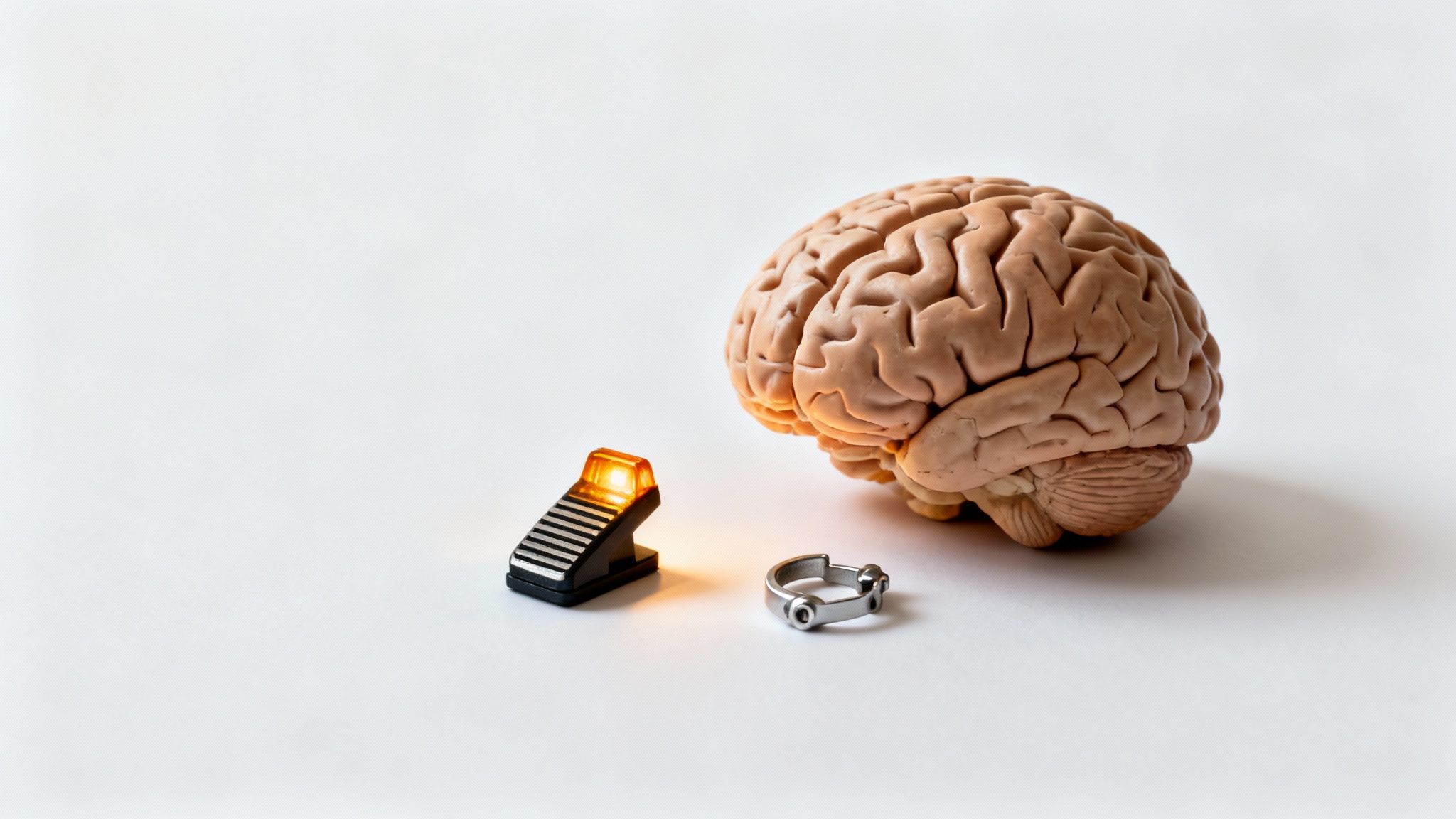
To effectively manage impulsivity, you have to understand where it comes from. These actions aren't random—they're often the result of a biological tug-of-war happening inside your brain. Think of it as a battle between your brain's accelerator and its brakes.
The accelerator is your brain’s reward system, a powerful, primal part that’s all about immediate gratification. It’s the voice that screams, "Do it! This will feel good right now!"
On the other side, you have the braking system—your prefrontal cortex. This is the more evolved, thoughtful part of your brain responsible for planning, reasoning, and weighing future consequences.