Figuring out when to seek marriage counseling usually happens when you realize you're stuck. You're having the same fights, feeling the same disconnection, and the resentment is building. When you can’t seem to break those negative cycles on your own, it's a good sign that some outside guidance could help.
Making the choice to go to marriage counseling is a brave, proactive step toward a healthier and more lasting partnership. There’s a common myth that therapy is the last stop before a breakup or an admission that you’ve failed. That couldn't be further from the truth.
Think of it more like preventative care for your most important relationship. It's a powerful way of saying you’re committed to your future together.
So many couples wait until their problems feel massive and deeply rooted, which makes them much harder to work through. Getting help early gives you a structured space to build better communication habits, learn how to disagree without causing damage, and tackle issues before they become permanent scars. Your therapist isn't a judge; they're a neutral guide who can help you both see your dynamic more clearly and find a better way forward.
This decision also shows a real shift in how we view relationship health. In fact, the market for marriage counseling services has grown significantly, jumping from $12.9 billion to$ 14.38 billion in just one year. This trend makes it clear that more and more couples see the real value in getting professional support when things get tough. You can discover more insights about the expanding counseling market here.
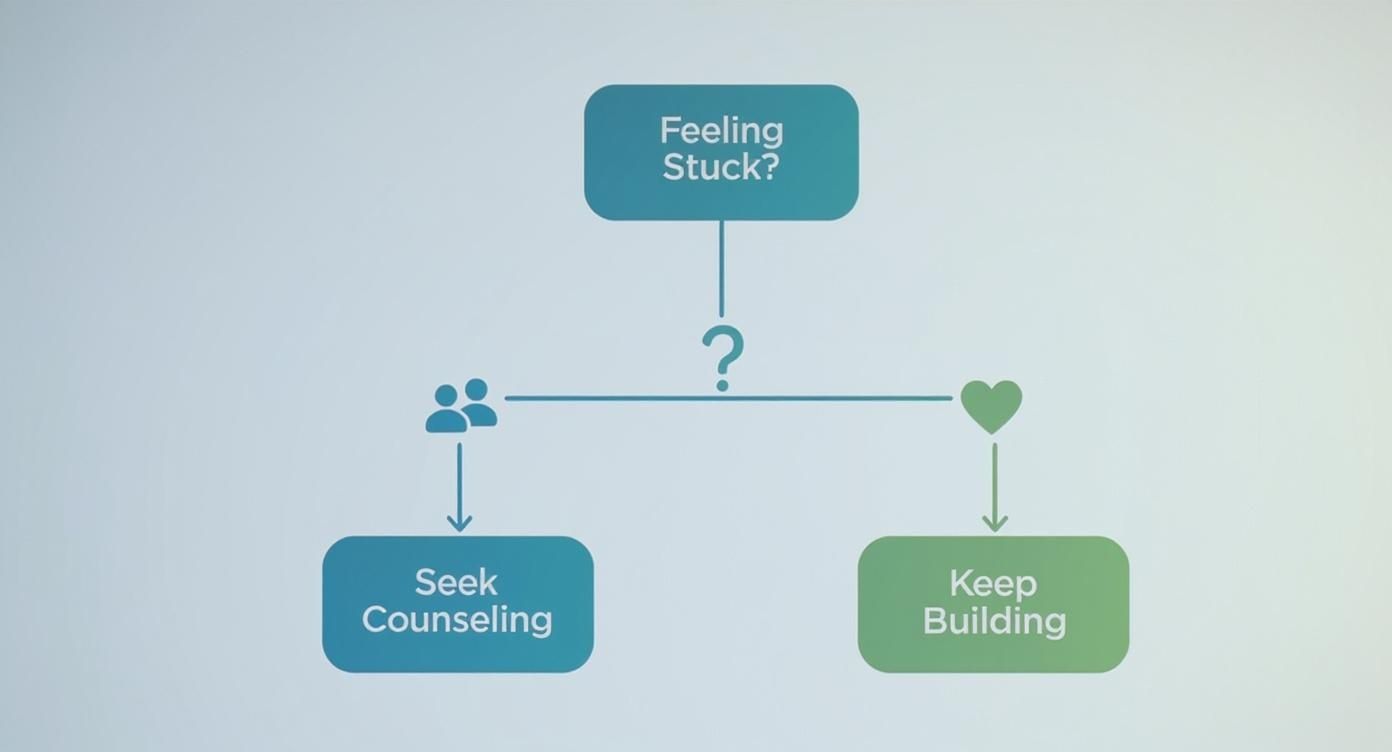
Feeling stuck is often the first sign that it might be time for a change. This simple flowchart gets to the heart of the decision.
Sometimes seeing it laid out visually simplifies a complicated emotional choice. It shows that if you feel like you can't move forward on your own, seeking professional guidance is a constructive and positive next step.
Counseling provides a dedicated space to stop, listen, and learn new ways of relating to each other. It’s an investment in your shared happiness and a testament to your desire to make the relationship work.
When it comes down to it, the goal isn't just about fixing problems. It's about building a stronger, deeper connection based on respect, understanding, and knowing how to really communicate with each other. In the sections that follow, we'll look at specific signs that it may be time to reach out for help, giving you a clearer picture of your own situation.
Knowing when it's time to bring in a professional is the first real step toward healing a fractured relationship. We’re not talking about the occasional squabble or a bad week; we're talking about recurring, damaging patterns. If left unchecked, these issues can quietly eat away at the very foundation of your partnership.
Understanding when to seek marriage counseling means recognizing these critical signs before they become too difficult to repair.

Does every conversation feel like you’re trying to navigate a minefield? This is more than just a simple misunderstanding. It’s when your main ways of talking to each other fall into criticism, contempt, defensiveness, and stonewalling—what experts often call the "four horsemen" of relationship conflict.
You might find that every small talk suddenly explodes into a full-blown fight. Or maybe one of you just shuts down completely, refusing to engage at all. This cycle makes it impossible to solve anything, leaving both partners feeling resentful and totally unheard.